 Reviews



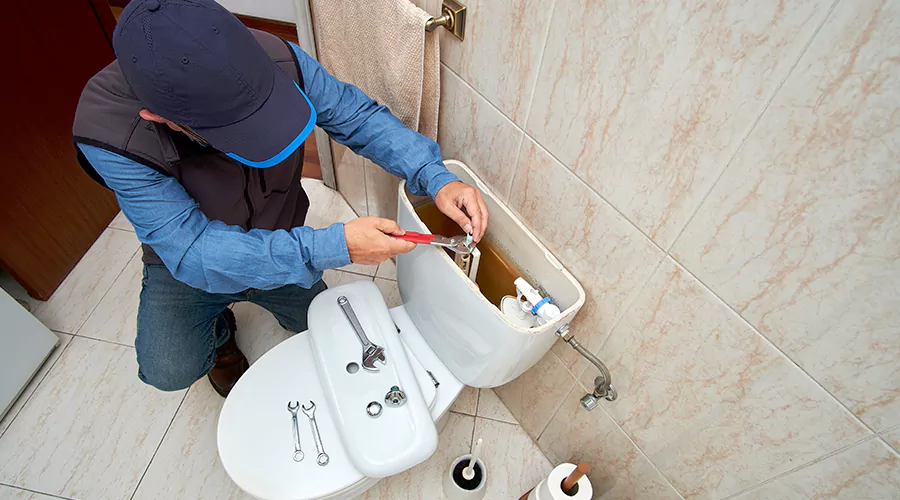
A toilet leaking from the tank usually has a failed bolt seal, tank-to-bowl gasket or fill-valve connection. Professional leaky toilet repair costs about $100 to $600 in 2026. First determine whether water is escaping outside the tank or silently passing from the tank into the bowl. A toilet leaking from tank areas can produce several similar symptoms. Water on the floor points toward an external seal. A tank that loses water without making the floor wet usually has an internal leak.
Is the Tank Leaking Outside or Into the Bowl?
External tank leaks leave water on the fixture or floor. Internal leaks send water through the flush valve into the bowl. Identifying which pattern you have prevents unnecessary replacement of tank hardware when the real problem is a flapper or another internal seal.
- Dry the exterior first.
- Check the floor after the toilet sits unused.
- Then listen for unexpected refill cycles.
- An external leak leaves visible moisture.
- An internal leak often causes the fill valve to turn on periodically.
Both problems involve the tank but they need different repairs.
Where Can a Toilet Tank Leak?
A toilet tank has several openings that must remain watertight. Tank bolts pass through the bottom on many two-piece toilets. The flush valve creates another large opening. A fill valve and water supply connection add another possible path for water.
- Common leak points include the tank bolts.
- Another source is the tank-to-bowl gasket.
- The fill-valve seal can also fail.
- A supply connector can drip beneath the tank.
- The porcelain itself can crack.
- An internal flapper leak sends water toward the bowl instead of the floor.
Oatey identifies the fill-valve gasket as one possible leak point where the valve passes through the bottom of the tank.
How Does a Tank Leak Get Worse?
A tank leak usually begins with a small seal failure. The amount of water can increase when rubber parts lose more compression or hardware shifts. Cracked porcelain creates a different risk because structural damage can spread and release water faster.
| Tank Condition | Early Symptom | Later Risk | 2026 Cost |
|---|---|---|---|
| Bolt seal wear | Drop below hardware | Floor moisture | Repair depends on parts |
| Gasket wear | Leak during flushing | Repeated puddles | $100 to $600 leak repair |
| Fill valve leak | Slow external drip | Constant wet area | $50 to $150 valve work |
| Cracked tank | Wet crack line | Larger water release | $50 to $100 tank part |
A toilet replacement costs about $50 to $100 for the tank itself in 2026 before labor. Valve replacement commonly runs about $50 to $150. A cracked tank should not be treated like a loose fitting.
What Are the Signs of a Tank Leak?
Tank leaks often show different patterns depending on the failed seal. Check the tank while it is full and repeat your inspection during flushing. The timing reveals whether standing water or moving flush water is reaching the failed connection.
- Water hangs beneath a tank bolt. The bolt seal may be worn.
- Moisture appears between the tank and bowl. The center gasket can be leaking.
- The leak becomes stronger during flushing. Moving water is exposing a failed seal.
- The fill valve connection stays wet. Its internal gasket may have failed.
- The supply line is wet. The leak may originate outside the tank itself.
- The toilet refills without being used. Water may be leaking internally.
- A visible tank crack darkens with moisture. Porcelain damage may be present.
- Rust develops around hardware. Water may have been present for some time.
- The floor is wet behind the bowl. The tank should be checked before the base.
- The tank rocks on the bowl. The connecting hardware or gasket may no longer be secure.
Checking the first wet location is more reliable than guessing from where the puddle ends up.
Why Does the Tank Leak Only When I Flush?
A leak that appears mainly during flushing often involves the tank-to-bowl connection. The large gasket beneath the flush valve carries the surge of water from the tank into the bowl. Poor seating or a worn gasket can let part of that water escape externally.
- Watch the underside while another person flushes.
- Do not place your face beneath the tank.
- Use a flashlight from the side.
- If water begins around the center joint rather than a bolt hole, the larger gasket deserves attention.
This timing clue is one of the fastest ways to separate gasket trouble from a standing-water bolt leak.
Can Tank Bolts Cause the Leak?
Yes. Rubber washers seal the holes where toilet bolts pass through the tank. Those washers can lose compression with age. The hardware can also loosen as the tank shifts slightly during years of normal use.
- Inspect both bolt locations.
- A drip that follows one bolt thread often starts at the rubber washer inside the tank.
- Avoid aggressive tightening.
- Porcelain can crack under excessive bolt pressure.
If the washer has hardened or split, tightening old hardware is not a lasting repair. Replacing the sealing components is the better approach.
Can the Fill Valve Leak Through the Tank?
Yes. The fill valve passes through an opening in the tank and uses a rubber gasket to stop water from escaping around the connection. A damaged gasket or incorrect installation can let water collect beneath the tank near the supply line.
- Dry the connection first.
- Wait while the tank remains full.
- Touch dry tissue around the valve shank.
- A wet valve connection points away from the tank bolts.
- Check the supply connector separately.
- Water can travel along the hose and make another connection look responsible.
Valve replacement costs about $50 to $150 in 2026 when professional repair is needed.
Can the Tank Leak Into the Bowl?
Yes. A worn flapper or flush-valve seal can allow water to leave the tank internally. No puddle appears on the floor because the water goes directly into the bowl. The fill valve then opens again to replace the lost tank water.
- Place several drops of food coloring in the tank.
- Do not flush.
- Wait about 15 to 20 minutes.
- Check the bowl.
- Colored water in the bowl confirms an internal path.
This type of leak can waste water for long periods because it is easy to miss. The inside of toilet tank components should then be checked for seal condition and correct movement.
What DIY Test Can Identify a Tank Leak?
A two-part test can separate external tank leaks from internal ones. First use dry tissue around all tank openings. Then perform a dye test in the tank. The combination shows whether water is reaching the floor or escaping silently into the bowl.
- Dry the tank.
- Place tissue below the bolts.
- Add tissue near the fill-valve connection.
- Wait with the toilet unused.
- Flush once and recheck.
- Afterward place food coloring in the tank.
- Do not flush during the dye test.
- Check the bowl after 15 to 20 minutes.
This test narrows the source before any part is removed.
When Should You Call a Professional?
Professional help is appropriate when the tank is cracked or the leak continues after sealing hardware has been replaced correctly. It also makes sense when corroded bolts cannot be removed safely. Damaged porcelain can turn a small tank repair into sudden water loss.
Leaky toilet repairs cost about $100 to $600 in 2026. General toilet repairs average $271.
Professional diagnosis makes sense when:
- A crack passes through the tank wall.
- Old bolts are severely corroded.
- The tank rocks after hardware adjustment.
- Water continues after gasket replacement.
- The shutoff valve will not close.
- The source cannot be located safely.
A severely damaged toilet water tank often makes replacement more sensible than repeated sealing attempts.
How Can You Prevent Another Tank Leak?
Tank leaks are easier to control when hardware remains stable and visible connections are checked before they corrode. A few minutes of inspection during routine bathroom cleaning can reveal moisture before it reaches the floor.
- Check beneath the tank every few months.
- Look for rust around hardware.
- Watch the supply connector.
- Do not lean against the tank.
- Avoid overtightening hardware.
- Listen for unexpected refill cycles.
Tank movement places extra stress on the gasket and bolt seals over time.
Conclusion
A toilet leaking from the tank should be diagnosed by location and timing. Water present between flushes can point toward bolt seals or supply connections. A leak that appears mainly during flushing can involve the tank-to-bowl gasket. Silent water loss into the bowl usually points toward an internal seal. If porcelain is cracked or corroded hardware cannot be removed safely, professional repair may prevent further damage.
Frequently Asked Questions
Why is my toilet tank wet on the outside?
Condensation can form on a cold tank. Dry the surface and check whether moisture forms evenly instead of starting from one fitting.
Why does my toilet tank leak after every flush?
A tank-to-bowl gasket can leak when flush water passes through the joint.
Can a loose tank cause leaking?
Yes. Movement can reduce gasket compression and loosen sealing hardware.
Can I seal a cracked tank with caulk?
A structural porcelain crack is not a good candidate for a surface seal. Tank replacement is generally safer.
Why does my tank refill when nobody used the toilet?
Water is probably leaving the tank internally. A flapper or flush-valve seal is a common place to check.